
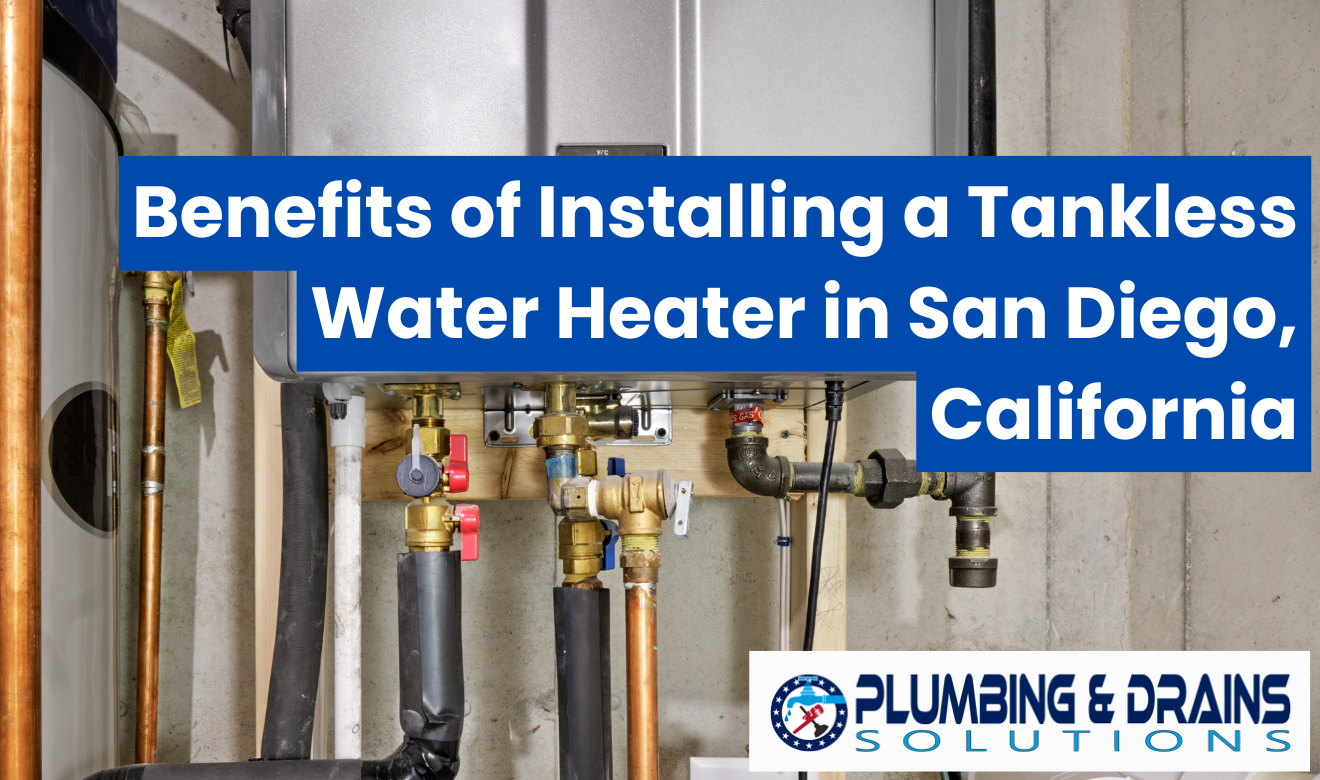
Executive Summary
A tankless water heater install in San Diego can be a strong upgrade for homeowners who want longer hot-water runtime, improved efficiency, and a space-saving design—provided the system is correctly sized and supported by adequate gas/electrical capacity and code-compliant venting. The best results come from planning around real household demand, installation requirements, and ongoing maintenance needs (especially scale management).
Key Takeaways
- Correct sizing is non-negotiable: Performance depends on matching the unit to your home’s required flow rate (GPM) and temperature rise, not just the number of bathrooms.
- Gas line capacity and venting often drive complexity: Many installs require upgrades to gas piping and a proper venting plan (including combustion air and condensate handling for condensing models) to operate safely and reliably.
- Cost depends on supporting upgrades, not just the unit: Estimates commonly include venting, gas/electrical modifications, plumbing changes (isolation valves/flush ports), permits, and optional recirculation or scale-protection measures.
- Recirculation solves wait-time—not tankless alone: Tankless improves runtime but doesn’t eliminate delay at distant fixtures; recirculation options can significantly reduce wait time and water waste when long pipe runs are present.
- Maintenance and water quality affect efficiency and lifespan: Regular flushing/descaling and easy service access (isolation valves) are essential to prevent scale-related performance loss and extend system life.
Installing a tankless water heater in San Diego is worth it if you want endless hot water, lower energy use, and a space-saving setup that fits many local homes. Because it heats water only when you turn on the tap, you’re not paying to keep a big tank hot all day.
For example, if two people take back-to-back showers, a tankless unit can keep the hot water going instead of running cold halfway through. If you have a garage laundry area or a tight utility closet, the wall-mounted design can free up floor space. And if your water heater sits far from the main bathroom, pairing a tankless unit with a recirculation option can cut down the wait time for hot water at the sink.
What to Know Before a Tankless Water Heater Install in San Diego
A successful tankless water heater install San Diego project starts with matching the unit to your home’s real hot-water demand and your existing utilities. Tankless systems are sized by:
- Flow rate (GPM): how many gallons per minute you need at once (showers, sinks, dishwasher).
- Temperature rise: how much the heater must raise incoming water temperature to your setpoint.
San Diego’s incoming water temperature is generally milder than colder climates, which can make it easier for a tankless heater to hit target GPM—however, sizing is still critical for multi-bath homes and simultaneous use.
Also remember: tankless is still part of your home’s plumbing system, so venting, gas line capacity, water pressure, and code compliance all matter as much as the heater brand.
How Tankless Water Heaters Work (and Why That Matters in Daily Use)
Tankless units heat water only when water flows through the heat exchanger. When you open a hot tap, a sensor detects flow and triggers ignition (gas) or energizes heating elements (electric). That’s why a tankless water heater install San Diego can deliver long runtimes without the “running out” problem common with storage tanks.
What you’ll notice after installation
- Endless runtime (within the unit’s rated GPM).
- A short delay before hot water reaches fixtures (distance + pipe volume still applies).
- Stable output when properly sized; temperature “wavering” can indicate undersizing, scale, or flow issues.
Cost: What a Tankless Water Heater Install in San Diego Typically Includes
Pricing varies widely because many homes need upgrades to support the heater safely. Instead of focusing on a single number, here’s what usually drives the cost of a tankless water heater install San Diego:
Main cost factors
- Fuel type: gas units often require venting and correct gas pipe sizing; electric units may require panel/circuit upgrades.
- Venting: category of venting, route length, termination location, and whether condensate management is needed.
- Gas line capacity: many tankless gas units need higher BTU input than older tank heaters.
- Water line modifications: isolation valves, service ports, recirculation line or pump, and mounting location.
- Permits and code requirements: common for gas appliances and venting changes.
- Scale protection: adding a treatment strategy if local water hardness is a concern.
Common line items you may see in an estimate
| Item | Why it matters | What to ask |
|---|---|---|
| Unit sizing (GPM/BTU) | Prevents cold-water “sandwich” and flow drop during simultaneous use | What GPM at a given temp rise will my model deliver? |
| Venting + combustion air | Safety and performance; required for gas units | Is it direct-vent? Where will the termination be placed? |
| Gas line sizing or re-pipe | Tankless often needs more BTU than a tank heater | Will you verify total load and pipe sizing? |
| Service valves + flush ports | Makes descaling/maintenance practical and cheaper | Are isolation valves included in the install? |
Bottom line: the best value in a tankless water heater install San Diego isn’t the cheapest bid—it’s the one that correctly sizes the unit and includes the upgrades needed for safe, code-compliant operation.
How to Size a Tankless Water Heater for a San Diego Home
If you want consistent comfort, sizing is the make-or-break step in a tankless water heater install San Diego. Here’s a practical way to think about it.
Step 1: Add up simultaneous hot-water uses (GPM)
Typical flow rates vary by fixture and by your installed aerators/showerheads, but a simple approach is to total the fixtures you expect to run at the same time (example: shower + bathroom sink + kitchen faucet).
Step 2: Estimate temperature rise
- Incoming water temperature (varies seasonally)
- Desired output (many households target ~120°F)
Step 3: Choose a unit that can deliver that GPM at your needed rise
Manufacturer spec sheets show flow curves at different temperature rises—this is the data that should drive your model selection for a tankless water heater install San Diego, not just “how many bathrooms you have.”
Quick example (real-life planning)
- Two showers back-to-back: tankless helps because recovery time isn’t the limiter.
- Two showers at the same time: you need enough rated GPM at your temperature rise.
Why Gas Line Capacity and Venting Are Often the Hidden “Gotchas”
Many homeowners are surprised that a tankless water heater install San Diego can require changes beyond swapping the appliance. Gas tankless units commonly have high maximum inputs, so the existing gas line that worked for a tank heater may not meet demand—especially if you also have a furnace, range, dryer, or pool heater on the same system.
Signs you may need gas line work
- Long gas piping runs with multiple appliances
- Older, smaller-diameter branches
- Appliances that already struggle under load (weak flames, performance dips)
If you’re already evaluating gas capacity, it’s also smart to know where and how to shut off your home’s gas in an emergency. This guide on water and gas emergency shut-off valves can help you understand what to look for and what to update.
Venting basics (high level)
- Non-condensing units typically vent hot exhaust; vent material and routing matter.
- Condensing units extract more heat and produce condensate that must be drained properly.
- Direct-vent designs bring in combustion air from outside, improving safety in tighter spaces.
How Recirculation Helps (and When It’s Actually Worth It)
A tankless heater doesn’t magically eliminate “wait time” for hot water—the water still has to travel through pipes. In a tankless water heater install San Diego, recirculation is the add-on that can dramatically reduce the delay at far fixtures.
Common recirculation options
- Dedicated return line: best performance; often found in newer builds or remodels.
- Crossover valve systems: can work without a dedicated return, using the cold line temporarily.
- On-demand activation: button or smart control; helps cut wasted water versus always-on.
When recirculation is usually worth it
- Your master bath or kitchen is far from the heater
- You regularly run water while waiting for it to warm up
- You want improved convenience at sinks (handwashing, dish prep)
What Maintenance Looks Like (Especially With Hard Water)
Maintenance is part of owning any on-demand system. The key is making maintenance easy during your tankless water heater install San Diego by including isolation valves and service ports.
What routine care often includes
- Descaling/flush: helps remove mineral buildup that reduces efficiency and flow.
- Cleaning inlet screens/filters: prevents flow restriction.
- Checking venting and combustion (gas units): helps ensure safe operation.
Why it matters (credible efficiency context)
The U.S. Department of Energy notes that tankless water heaters can be 8%–34% more energy efficient than conventional storage water heaters, depending on hot water use patterns (with higher savings in lower-use homes). Real-world performance depends on correct sizing, proper install, and staying ahead of scale—especially in areas where mineral content can accumulate inside a heat exchanger.
What Permits and Codes Typically Affect in San Diego
Permitting requirements can vary by scope and municipality, but a tankless water heater install San Diego frequently intersects with safety-critical topics like gas piping, venting, seismic considerations, and combustion air. The practical takeaway: if your project changes fuel venting, gas piping, or location, expect code-driven requirements.
Install details that are commonly code-relevant
- Approved vent materials and termination clearances
- Gas shutoff valve access and sediment trap requirements (where applicable)
- Bonding/grounding considerations for metallic piping systems
- Proper drainage for condensate (condensing units)
Planning for this up front helps avoid rework and keeps your tankless water heater install San Diego on schedule.
When a Tankless Upgrade Is a Bad Fit
Tankless isn’t always the best answer. You may want to reconsider a tankless water heater install San Diego if:
- Your electrical service is limited and you’re considering electric tankless (upgrades can be substantial).
- You have very high simultaneous demand and don’t want to use multiple units or a larger model.
- You won’t maintain it (especially in harder-water conditions).
- Venting options are extremely constrained for gas units and rerouting isn’t feasible.
Why Water Pressure and Flow Should Be Checked First
Flow activates a tankless heater. If your water pressure is unstable, fixtures are clogged, or the home has flow restrictions, you may see inconsistent performance even after a tankless water heater install San Diego.
It can also be the right moment to address related plumbing needs discovered during installation—like a partially blocked line. If slow drains or backups show up during the work, scheduling professional Drain Cleaning can prevent bigger problems that interfere with overall plumbing performance.
Fast troubleshooting checklist (homeowner-friendly)
- Confirm fixture aerators/showerheads aren’t clogged
- Check if low flow happens at one fixture or the whole house
- Ask whether the heater has minimum flow activation thresholds
- Verify the installer measured dynamic pressure and flow
How Long Tankless Units Last (and What Impacts Lifespan)
Longevity depends on water quality, maintenance, and installation quality. In general, tankless water heaters are often cited as having a longer service life than tank-style units, but only when maintained and protected from scale. The most important lifespan boosters you can control during a tankless water heater install San Diego are:
- Correct sizing (prevents overworking the unit)
- Isolation valves/service ports (makes flushing realistic)
- Scale management strategy (treatment + maintenance schedule)
- Proper venting, gas pressure, and combustion setup (gas units)
San Diego Examples: Matching the System to the Home
Example 1: Small home, limited space
A compact, wall-mounted setup is often a win when the existing tank is in a tight closet or garage corner. In this scenario, a tankless water heater install San Diego is primarily about space savings and eliminating standby heating losses.
Example 2: Family home with simultaneous demand
If mornings involve multiple showers and the dishwasher running, the install needs careful GPM sizing. Sometimes the best solution is a higher-capacity unit, sometimes adding a second unit, and sometimes prioritizing fixtures with a recirculation strategy so you get comfort without overbuilding.
Example 3: Long pipe runs to a master bath
If you’re waiting 60–90 seconds for hot water at the far sink today, a tankless water heater install San Diego paired with recirculation can improve convenience and reduce water wasted while waiting—especially at sinks used frequently throughout the day.
Ready for Reliable Hot Water? Here’s the Pro-Level Checklist
If you’re planning a tankless water heater install San Diego, use this checklist to keep the project focused on performance and safety—not just the appliance swap:
- Demand audit: calculate simultaneous GPM and temperature rise
- Utility verification: confirm gas line sizing or electrical capacity
- Venting plan: select correct vent type, route, and clearances
- Serviceability: include isolation valves and flush ports
- Scale plan: flushing schedule + water quality strategy
- Recirculation decision: only if distance/usage justifies it
- Safety readiness: know your water and gas shutoffs
When these steps are done right, a tankless water heater install San Diego delivers what people actually want: steady hot water, better efficiency, and fewer “why is it doing that?” moments after the install.
Industry trust signals: Look for technicians with state-required licensing for plumbing work, documented permit/code familiarity for gas and venting scopes, and manufacturer training for tankless commissioning (gas pressure verification, combustion setup, and error-code diagnostics). That combination is what consistently separates a long-lasting tankless water heater install San Diego from a callback-prone one.
Frequently Asked Questions
Stop Guessing on Tankless—Get a San Diego Install That Actually Delivers
Endless hot water sounds great—until the unit is undersized, the gas line can’t keep up, or the venting isn’t right. If you want a tankless setup that fits your home, your usage, and San Diego code requirements, Downtown San Diego Plumber, Drain Cleaning, Water Heater Services can help you choose the right GPM/BTU capacity, confirm gas or electrical readiness, plan proper venting, and install service valves for easy maintenance—so your “upgrade” doesn’t turn into a list of callbacks.



