
Executive Summary
Affordable drain cleaning in San Diego is easiest when homeowners treat slow drains as a routine maintenance issue, not an emergency. Catching early warning signs and choosing the right cleaning method (snaking, hydrojetting, or camera inspection) helps prevent backups and repeat service calls.
Key Takeaways
-
Spot early warning signs to avoid emergency clogs: Slow draining, gurgling, odors, and recurring clogs often indicate buildup that’s cheaper to address before a full backup.
-
Multiple slow drains often signal a mainline problem: If more than one fixture is draining poorly—especially the lowest drains—it’s more likely a shared branch or main sewer line issue than a single localized clog.
-
Most clogs come from daily habits and common materials: Grease, hair/soap scum, “flushable” wipes, disposal misuse, and mineral scale are the most frequent causes of restrictions in residential drain lines.
-
Match the method to the cause for best value: Snaking fits simple localized blockages, hydrojetting is better for heavy buildup and recurring slow drains, and camera inspections reduce guesswork when problems repeat.
-
Avoid chemical drain cleaners and use safer prevention: Chemical openers can damage pipes and create safety hazards, while basic maintenance (strain food/hair, dispose of grease properly, periodic cleaning) reduces repeat clogs and long-term costs.
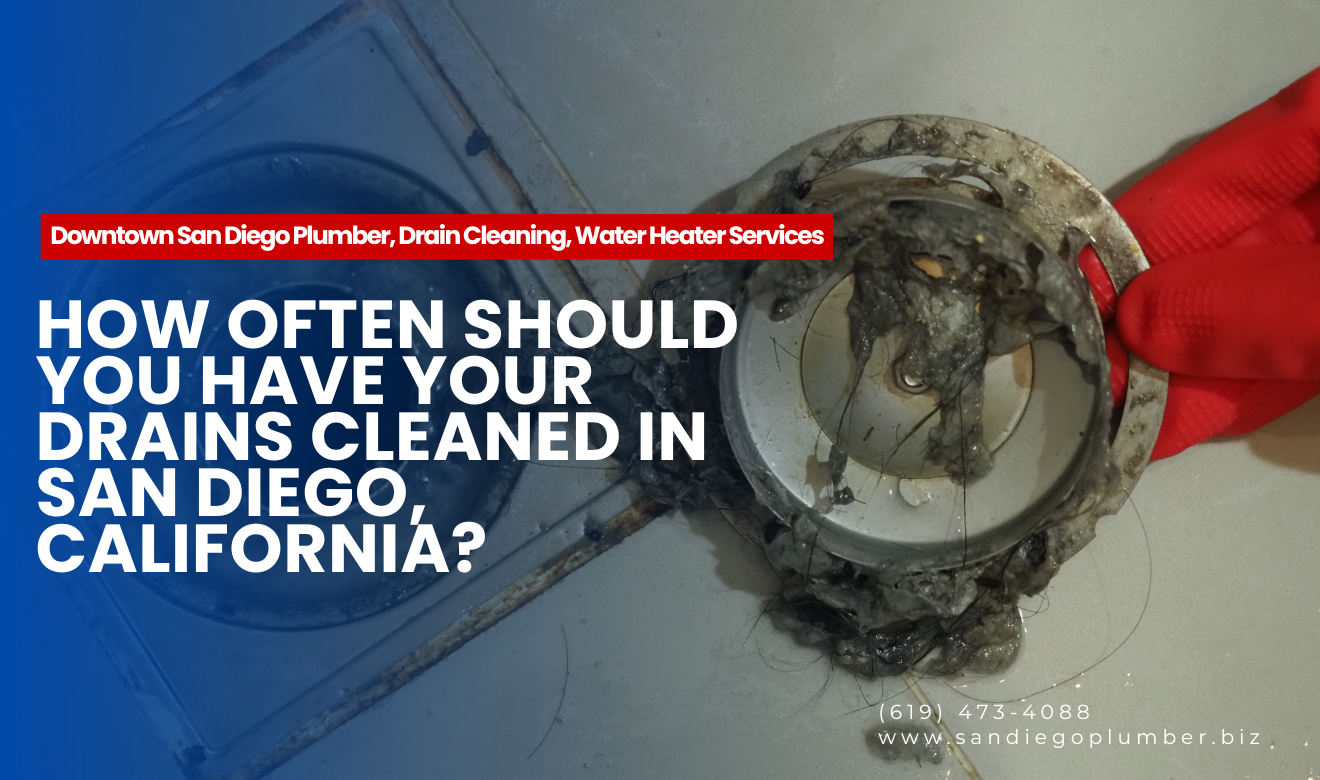
In San Diego, California, most homes should have their drains cleaned about once a year, while busy households or older plumbing may need it every 6 months. If you cook with a lot of oil, have long hair clogging shower drains, or run a garbage disposal daily, cleaning more often can prevent backups. For example, a kitchen sink that gurgles after washing dishes or a shower that pools water around your feet are signs you shouldn’t wait. Staying on a simple schedule also makes it easier to find affordable drain cleaning San Diego options before a small slowdown turns into an emergency clog.
How to tell your drains need cleaning (before they clog)
If you’re trying to stay ahead of backups and still find affordable drain cleaning San Diego, the goal is to catch “slow drain” symptoms early—when a simple cleaning is usually enough.
Early warning signs you shouldn’t ignore
- Slow draining in one fixture (sink, tub, shower) that keeps getting worse.
- Gurgling sounds after running water—often air trapped behind buildup.
- Recurring clogs that come back days or weeks after plunging.
- Odors from a sink or shower (biofilm, grease, food waste).
- Water backing up in a tub when a toilet flushes (shared line warning).
- Multiple slow drains at once—more likely a mainline issue than a single fixture.
Featured-snippet answer: What’s the fastest way to know if it’s the main sewer line?
If more than one drain is slow or backing up (especially lowest fixtures like a shower or floor drain), it’s often the main line. A single slow sink is usually a localized clog; multiple fixtures point to a shared branch or sewer lateral.
When you act at the first signs, you can usually schedule affordable drain cleaning San Diego during regular hours instead of paying for emergency service.
What usually causes clogs in San Diego homes
Most drain problems come down to a few repeat offenders. Even in newer neighborhoods, everyday habits can build up residue inside pipes and narrow the passage over time.
Common clog causes (and where they show up)
- Kitchen grease and oil: congeals on pipe walls and traps food particles (kitchen sink).
- Hair + soap scum: forms dense mats that slow shower and tub drains.
- “Flushable” wipes: many don’t break down like toilet paper and can snag in bends.
- Garbage disposal overuse: starchy foods (rice/pasta), coffee grounds, fibrous peels can accumulate.
- Mineral scale: hard-water deposits can restrict flow over time.
A quick reality check on “flushable” wipes
Consumer and utility groups have repeatedly warned that wipes can drive clogs and sewer problems because they often remain intact and tangle with fats and debris. That’s one reason many plumbers recommend treating wipes as trash—even when they’re labeled flushable—if you want affordable drain cleaning San Diego to stay truly affordable long-term.
If you rely heavily on a disposal, it also helps to understand best practices and warning signs—see garbage disposals guidance for care tips and common failure symptoms.
How drain cleaning works (snaking vs. hydrojetting vs. inspection)
Not all clogs are the same, and the “right” method depends on what’s inside the pipe and how far the problem extends. Knowing the basics helps you choose affordable drain cleaning San Diego without paying for unnecessary add-ons.
Mechanical drain cleaning (auger/snake)
- Best for: hair clogs, paper buildup, soft blockages, localized obstructions.
- Pros: fast, effective for many fixture clogs, usually lower cost.
- Limitations: can punch through a clog without fully removing greasy residue from pipe walls.
Hydrojetting
- Best for: grease, sludge, heavy biofilm, recurring clogs, long pipe runs.
- Pros: cleans pipe walls more thoroughly than many snakes; useful for chronic slow drains.
- Limitations: may not be appropriate for fragile or failing pipes until inspected.
If recurring clogs keep coming back, Hydrojetting is often the next logical step because it targets buildup that routine snaking may leave behind—an important strategy for affordable drain cleaning San Diego when you’re trying to stop repeat service calls.
Sewer video inspection
- Best for: repeated backups, suspected root intrusion, offsets, broken lines, mystery odors.
- Pros: shows the real cause and location, helps avoid guesswork.
- Limitations: adds an upfront cost, but can prevent paying for the wrong fix.
Featured-snippet answer: Which method is “best”?
Snaking is best for a simple, localized clog; hydrojetting is best for heavy buildup and recurring slow drains; a sewer camera inspection is best when the cause is unknown or the problem keeps returning.
Cost: What affects pricing for affordable drain cleaning in San Diego
Pricing varies because “drain cleaning” can mean anything from a quick bathroom sink stoppage to a mainline blockage. If you’re shopping for affordable drain cleaning San Diego, these are the variables that matter most.
Main pricing factors to ask about
- Which drain? (bathroom sink vs. kitchen line vs. main sewer line)
- Severity and access: easy trap access vs. cleanout needed vs. roof vent access.
- Time of service: after-hours/weekend calls typically cost more.
- Method used: auger vs. hydrojetting vs. camera inspection.
- Condition of the piping: older or damaged pipes may require gentler methods or repairs.
Cost-saving checklist (without cutting corners)
- Schedule service before a full backup (avoid emergency rates).
- Describe symptoms clearly (which fixtures, when it happens, any gurgling/odors).
- Ask whether the price includes testing the drain after cleaning to confirm flow.
- If clogs recur, consider inspection to avoid repeat “temporary fixes.”
| Scenario | Most likely approach | Why it impacts cost |
|---|---|---|
| Single bathroom sink drains slowly | Trap cleanout or small auger | Quick access and localized clog |
| Kitchen sink backs up after dishwashing | Auger; sometimes jetting if grease-heavy | Grease buildup can require deeper cleaning |
| Multiple fixtures slow/gurgling | Mainline cleaning + possible camera | Longer run and more diagnostic time |
| Recurring backups every few months | Jetting + inspection to identify root cause | Prevents paying repeatedly for short-term fixes |
The most consistent path to affordable drain cleaning San Diego is matching the method to the cause—fast fixes for simple clogs, deeper cleaning when buildup is the real issue.
Why DIY drain cleaners can backfire (and what to do instead)
Store-bought chemical drain openers are tempting because they’re cheap upfront. But they can create bigger problems—especially in older plumbing—by generating heat or reacting with materials in the line.
Potential downsides of chemical drain cleaners
- Can damage pipes (especially if used repeatedly or left sitting in slow drains).
- May not remove the clog (often only creates a small channel through buildup).
- Creates hazards for whoever clears the clog later (chemical splash risk).
- Can harm fixtures and finishes if spilled.
Safer DIY steps that often help
- Boiling water (kitchen only): helpful for grease films (avoid on fragile piping).
- Plunge correctly: use a sink plunger for sinks; a flange plunger for toilets.
- Clean the stopper/hair screen: many “clogs” are right at the drain opening.
- Try an enzyme drain maintainer: slower, but designed to reduce organic buildup over time.
If DIY steps don’t improve flow quickly, it’s usually cheaper to book affordable drain cleaning San Diego early than to wait for a complete backup that may involve cleanup and restoration.
How to prevent repeat clogs with a simple maintenance plan
Prevention doesn’t have to be complicated. The best maintenance plans focus on what actually enters the drain and how quickly residue builds in your specific home.
Kitchen habits that reduce clogs
- Wipe greasy pans with a paper towel before washing.
- Collect cooking oil in a container—don’t pour it down the sink.
- Use a sink strainer to catch food scraps.
- Run cold water when using a disposal; avoid stuffing it with fibrous or starchy waste.
Bathroom habits that reduce clogs
- Use a hair catcher and empty it regularly.
- Avoid flushing wipes, paper towels, or hygiene products.
- For recurring hair issues, do monthly stopper cleaning.
Featured-snippet answer: How often should you do drain maintenance?
Most homes benefit from annual drain cleaning, while heavy-use households, long-hair showers, frequent disposal use, or older plumbing often do better every 6 months. If slow drains return sooner, upgrade to inspection or a deeper clean.
For a deeper prevention approach and seasonal tips, see drain maintenance strategies that help keep buildup from returning—one of the easiest ways to keep affordable drain cleaning San Diego within reach year after year.
When a slow drain is actually a bigger plumbing problem
Some drainage problems aren’t “dirty drains”—they’re symptoms of aging materials, shifting soil, root intrusion, or a compromised line. That’s when repeated cleanings stop being affordable.
Red flags that suggest more than routine cleaning
- Backups after cleaning (days/weeks later) in the same line
- Sewage odors outdoors near a cleanout or yard area
- Wet spots in the yard during dry weather
- Gurgling + toilet bubbles when other fixtures drain
- Older cast iron piping with recurring scale, rough interiors, or corrosion
Older homes may have drain lines that deteriorate internally over time, where buildup and snags become chronic. If your home has aging drain materials, it may be worth reading about cast iron replacement to understand when cleaning alone stops being the best value—even if you’re aiming for affordable drain cleaning San Diego.
A practical example from the field
A common scenario is a home with recurring kitchen backups every few months. A snake clears the immediate blockage, but grease residue remains on pipe walls. Over time, the opening narrows again until the next clog. In many of these cases, a more thorough cleaning method (and sometimes a camera inspection to confirm pipe condition) reduces repeat calls and total annual cost—often the real definition of affordable drain cleaning San Diego.
What to ask before booking a drain cleaning appointment
Good questions protect your budget and help ensure you’re buying a real solution, not just a temporary improvement.
Questions that lead to better outcomes
- Is this price for a localized drain or the main sewer line?
- What method will you start with, and what would make you switch methods?
- Do you verify flow at the end (run water, check nearby fixtures)?
- If the clog returns soon, what are the next steps—camera inspection, jetting, repair?
- Will you use the existing cleanout, or do I need one installed?
Why clear communication matters
“My sink is slow” can mean anything from a dirty pop-up assembly to a branch line packed with grease. The more detail you share, the easier it is to plan a straightforward, affordable drain cleaning San Diego visit rather than a trial-and-error process.
It also helps to understand how the overall system works—this overview of plumbing explains the basics of water supply and drainage systems in plain terms.
Drain cleaning services that commonly pair with better long-term results
Drain cleaning is often step one. If your goal is fewer emergencies and more predictable costs, these related services can help stabilize the system—especially in older homes or properties with frequent clogs.
Services that reduce repeat problems
- Sewer video inspection: confirms whether you’re dealing with buildup, roots, offsets, or damage.
- Hydrojetting: removes heavy residue and restores better flow in grease-prone lines.
- Sewer repair: addresses the underlying failure when cleaning is no longer enough.
- Cleanout installation: improves access, reducing labor time on future cleanings.
Pairing the right follow-up with your affordable drain cleaning San Diego appointment is often what keeps a manageable slowdown from turning into recurring backups.
Smart Wrap-Up: Keep drains clear, costs predictable
Affordable drain cleaning San Diego is easiest to achieve when you treat slow drains like a maintenance signal—not an emergency. Watch for early symptoms (gurgling, odors, pooling water), avoid risky chemical quick fixes, and match the cleaning method to the type of blockage. If clogs keep returning, upgrade the approach with deeper cleaning or inspection so you stop paying for the same problem repeatedly.
Why you can trust this guidance
- Drain-cleaning best practices align with standard trade methods used across residential plumbing: mechanical cabling for localized clogs, hydrojetting for heavy buildup, and camera inspection for unknown or recurring issues.
- Recommendations prioritize safety (avoiding chemical exposure), system longevity (protecting older piping), and cost control (preventing repeat call-outs)—all core professional plumbing principles.
If you stay consistent, affordable drain cleaning San Diego becomes a planned household task instead of a last-minute crisis.
Frequently Asked Questions
Stop a Slow Drain Before It Turns Into a Full-Blown Backup
If your sink is gurgling, your shower is pooling, or clogs keep coming back, don’t wait until you’re dealing with an after-hours emergency. Downtown San Diego Plumber, Drain Cleaning, Water Heater Services can help you pinpoint what’s causing the slowdown and recommend the right fix—whether that’s a quick snaking, a deeper hydrojetting clean, or a camera inspection for recurring issues. Book now and keep your drains clear, your costs predictable, and your day moving.



